
Dupuytren’s contracture is a condition that causes the fingers to gradually bend toward the palm due to thickened cords of tissue beneath the skin. In selected patients, ultrasound-guided percutaneous needle fasciotomy is a minimally invasive technique that may help improve finger straightening and hand function.
Our clinic offers ultrasound-guided percutaneous needle fasciotomy (also called needle aponeurotomy) as part of our ultrasound-guided minimally invasive hand procedures.
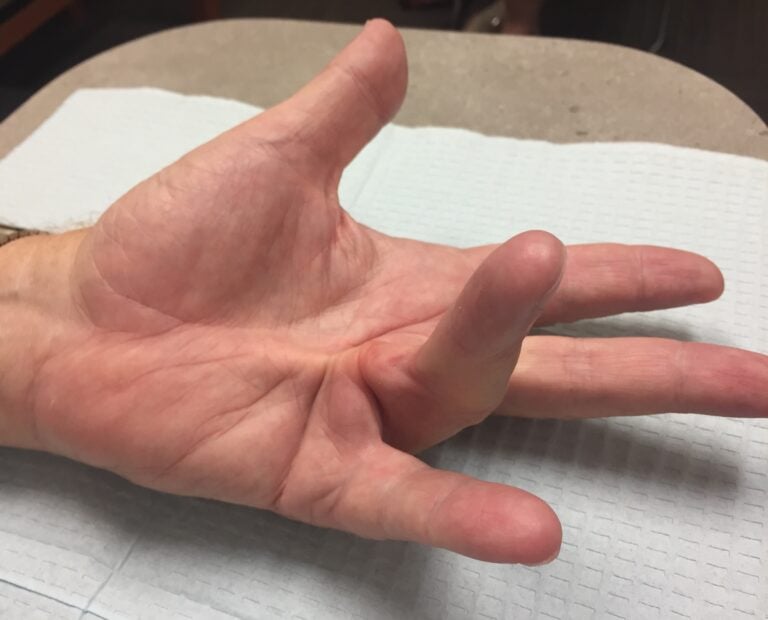
Dupuytren’s contracture is a condition affecting the fascia, a layer of connective tissue beneath the skin of the palm.
Over time, this tissue can thicken and form firm cords that pull one or more fingers toward the palm.
People may notice:
Small nodules or lumps in the palm
Thick cords developing under the skin
Difficulty straightening one or more fingers
Reduced hand function in daily tasks
The ring finger and little finger are most commonly affected.
Dupuytren’s contracture usually progresses slowly and varies significantly between individuals.
Percutaneous needle fasciotomy is a minimally invasive technique that aims to weaken or divide the tight cord of tissue responsible for the finger contracture.
Using real-time ultrasound guidance, the clinician can visualise the cord and surrounding structures while performing the procedure.
A fine needle is used to carefully divide the cord at selected points, allowing the finger to straighten more freely.
Key features include:
Ultrasound-guided precision
Minimally invasive technique
No large surgical incision
Targeted treatment of the diseased cord
The use of ultrasound helps guide the procedure and assists with visualising surrounding tendons, nerves, and blood vessels.
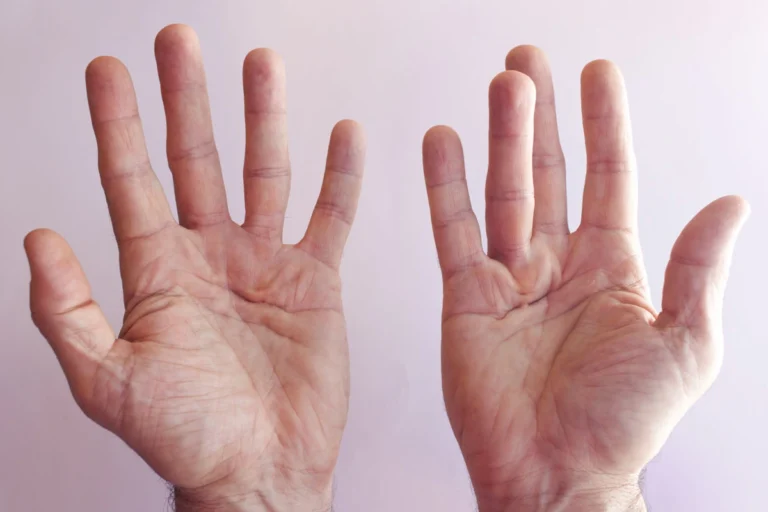
Not every patient with Dupuytren’s contracture requires treatment.
Treatment may be considered when:
Finger contracture interferes with hand function
The finger cannot fully straighten
Daily activities become difficult
Patients who may be considered suitable for percutaneous needle fasciotomy include those with:
Palpable cords causing finger bending
Mild to moderate contractures
Clinical findings appropriate for minimally invasive treatment
However, some patients may be better suited to other treatment options, including open surgical procedures.
A clinical assessment and imaging evaluation help determine the most appropriate approach.
Dupuytren’s contracture can be managed using several treatment approaches.
In early stages with minimal symptoms, monitoring the condition may be appropriate.
A minimally invasive technique that weakens the cord using a needle.
It can provide improved finger extension with minimal disruption to surrounding tissues.
Procedures such as fasciectomy remove the diseased tissue through surgery.
Open surgery may provide longer-lasting correction in some cases but involves a larger procedure and longer recovery.
Your clinician will discuss which option may be appropriate based on the severity of the contracture and individual circumstances.
Recovery experiences vary between individuals.
Patients are generally advised about:
Gradual return to normal hand activities
Hand exercises if recommended
Monitoring finger movement and comfort
Some patients may benefit from hand therapy as part of recovery.
Your clinician will provide personalised aftercare guidance.
All treatments have potential risks and limitations.
For Dupuytren’s contracture, important considerations include:
Recurrence of the contracture over time
Incomplete correction of finger bending
Temporary soreness or bruising
Injury to surrounding structures (rare)
In some cases, open surgical treatment may offer stronger long-term correction, and your clinician will discuss the advantages and limitations of each option.
No. Needle fasciotomy is a minimally invasive technique using a needle to divide the cord rather than removing it surgically.
Yes. Ultrasound imaging helps guide the treatment and visualise nearby structures.
Recovery experiences vary. Minimally invasive procedures often involve smaller skin entry points, but outcomes depend on the individual case.
Dupuytren’s contracture can recur after any treatment. Your clinician will discuss this during consultation.
This depends on the pattern and severity of the contracture and the clinical assessment.